
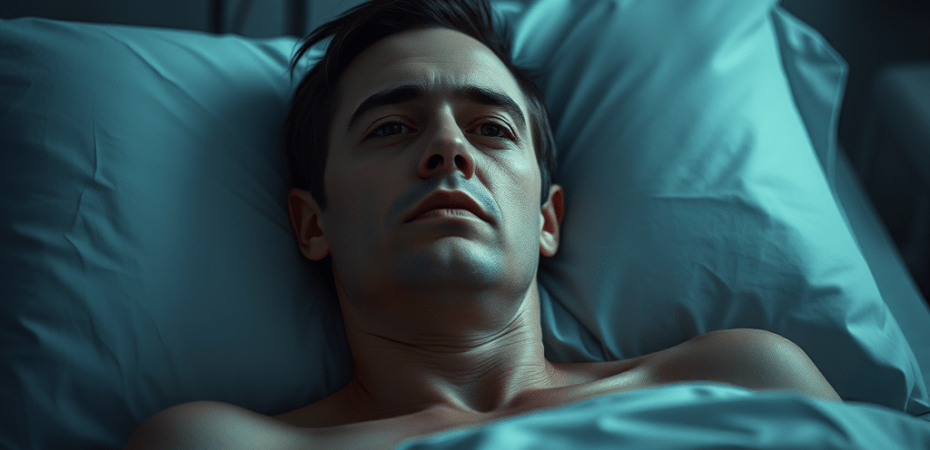
Today, I came across a clip from Grey’s Anatomy (the video posted in this blog post), and it hit home about how far I’ve come from everything I’ve been through since the day I was born. The way this clip resonated with me is because I’ve faced similar challenges since I was a baby. I’ll never forget it.
Facing Dismissal and Misdiagnosis
“Oh, it’s all in her head; she’s a hypochondriac.”
“You need therapy; you’re obviously not sick.”
“We can’t find any abnormalities, so we can’t do anything because it’s all in your head.”
These dismissals continued until I was 15 years old when I met Dr. Cynthia See, a pediatric gastrointestinal specialist. Before my first appointment, I took the initiative to log my symptoms. I documented every little detail—what I felt, what I did to instigate it, and the dates. When I shared this log with her, she diagnosed me without needing extensive tests.
She conducted tests just to confirm her suspicions: I had no flap on my esophagus, and my pylorus (the tube that processes food from your stomach to your intestines) was thickened. Normally, you should process 40% to 60% of food within 90 minutes. Yet, a test that involved eating food coated with a radioactive liquid while lying under an X-ray machine showed that I was only processing 15%. Food was sitting in my stomach much longer than it should have. An endoscopy later confirmed I was born without a flap on my esophagus. (An endoscopy involves inserting a camera through the mouth down the esophagus to the stomach.) Of course, I was sedated for that because I wouldn’t have handled it otherwise.
Continued Struggles
Despite this progress, I faced further misdiagnoses and accusations of faking my issues. People often assumed I was just trying to skip school like all kids do. Before being officially diagnosed and treated for endometriosis (knock on wood, as I’m still in remission), I visited an OB/GYN at 16 and explained my symptoms. Instead of helping me, he red-flagged me as a drug seeker. This was before my surgeries, so I wasn’t even close to being addicted at that time. He falsely accused a 16-year-old girl of seeking pain meds after I detailed my endometriosis symptoms. This experience is why I relate to women expressing their frustrations with their OB doctors; they often dismiss genuine concerns about endometriosis.
At 15 and 16, I finally began getting answers, but that was just the beginning. I had no idea I would endure eight major surgeries, numerous minor procedures, be diagnosed with anemia and hypokalemia, receive many potassium infusions, and undergo an emergency blood transfusion. I faced a period of near-permanent mental disability due to psychosis, but I miraculously recovered and exceeded doctors’ expectations. I’m also a former addict to hydromorphone by IV. If you had told me at 16 what battles lay ahead and how many doctors and nurses would treat me poorly, I wouldn’t have believed it.
Support and Turning Points
I won’t name him because I’m not sure he’d be okay with it, but one of the best doctors I had was a geriatric specialist. He often joked that I was his youngest patient. I met him when I needed emergency surgery for a blood clot about to enter my heart. He took me on as a patient, saying I was his favorite puzzle to solve. That’s how complicated my case was—he embraced the challenge of figuring out my diagnosis.
He also stood by me when nurses treated me poorly and was furious with one of the ER doctors who dismissed me and sent me home while I had a blood clot heading toward my heart. I’ll name him: Dr. Robert Hook. I will NEVER forget how awful he was and how he almost killed me TWICE! My geriatric doctor even made house calls because of how sick I was. I had a nurse come to my house twice a week to manage my IV ports and draw blood. Once I got better, my mom and I donated my leftover medical supplies, worth over $4,000, to the Castaic animal shelter.
Reflections on My Journey
I will never forget how far I’ve come, and today, I experienced numerous flashbacks from that clip. I was suicidal at one point during this journey as a teenager. I have been diagnosed with anxiety, complex post-traumatic stress disorder, and depression.
Through these challenges, I’ve learned invaluable lessons about resilience, self-advocacy, and the importance of surrounding myself with those who genuinely support me. I’ve come to understand that my worth isn’t defined by others’ opinions. Accepting my experiences has empowered me to embrace my truth and share it with others who may be struggling. I learned to accept people for who they are and that I don’t always have to be liked or loved by everyone. There will always be someone who believes me.
I remember going to a different ER to avoid Dr. Hook (I knew my patient rights allowed me to request a different doctor), but that turned out to be a mistake. The ER doctor there was similar to Dr. Hook, and at 19, I told him he was completely useless. I was bold enough to say what was on my mind because I was literally DYING! I was resuscitated twice in the hospital, but I don’t remember that experience, as amnesia is common when you’re close to “the light.”
At one point, I weighed only 82 pounds, and I’m 5’4 ½”. Little kids would ask their parents why I was so skinny, and their parents would apologize. I understood, but I would cry about it later at home. Eating out in public became a nightmare; people would stare and watch me eat because of how thin I was. I once broke down in tears at a popular local Mexican restaurant, “La Cocina,” and after that, I only ate at home.
This all explains why it’s not easy to get under my skin or provoke a reaction from me. During my illness, people truly showed me their true colors. Before receiving my diagnoses and treatment, I was often called “crazy.” A “friend” even told me I was just craving attention.
Conclusion: A Message of Hope
My experiences have taught me that it takes something significant to get under my skin. I’m used to being labeled a liar and lazy. Given what I’ve endured, I’ve become desensitized to unkindness. But be prepared; if you mistreat me or talk behind my back, I won’t hesitate to express my thoughts about you. People can be so entitled, thinking they can behave however they want while expecting me to “be nice.”
PFFFFFT NO. Not on my watch. If I think you have an ugly soul, then that’s what you are—period. That goes for doctors, too.
I hope my blog posts serve as a blueprint or handbook for readers who need support. I want to inspire others to advocate for themselves and understand that their voices matter. I look forward to reading any comments. Please know that any hateful or spiteful comments will not be posted and will be deleted.
Let’s foster a community where we share our experiences, support one another, and remind each other that we are not alone in our struggles. Together, we can break the silence, uplift each other, and pave the way for understanding and healing.
 A Metamorphosis Addiction